
EFRAG Releases Simplified European Sustainability Reporting Standards

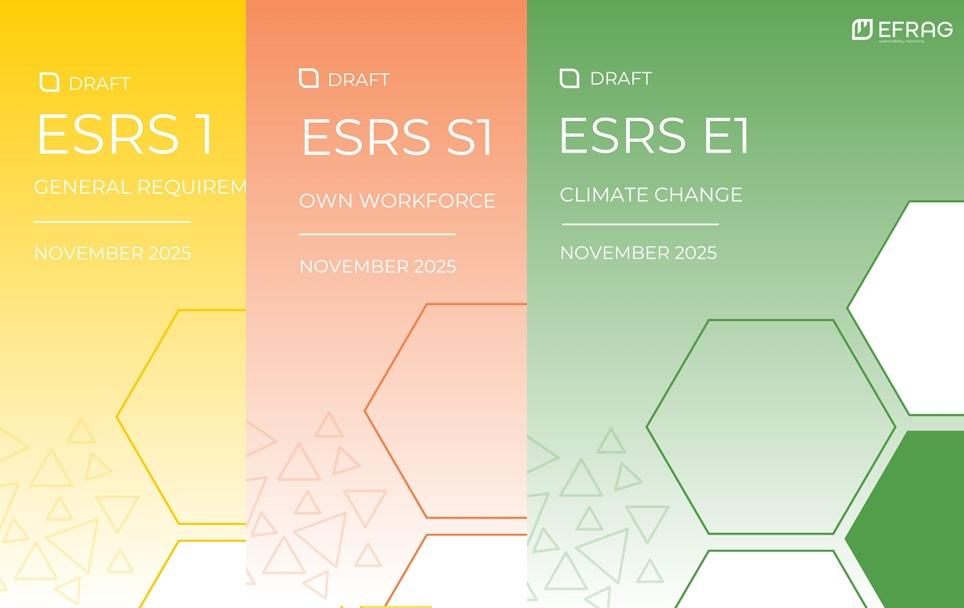
The European Financial Reporting Advisory Group (EFRAG) announced the release of its finalized proposed revision of the European Sustainability Reporting Standards (ESRS), aimed at significantly simplifying and reducing sustainability reporting requirements for companies under the EU’s Corporate Sustainability Reporting Directive (CSRD).
The new proposed ESRS would dramatically cut back reporting obligations for companies under the CSRD, with EFRAG reducing datapoints in the standard by more than 70%, and also includes significant simplifications in areas including materiality assessments, and data collection from companies’ supply chains.
In a statement released announcing the publication of the updated ESRS, EFRAG said that the simplification of the sustainability reporting standards for companies “fosters greater competitiveness by easing the regulatory landscape without compromising the fundamental objective of the Green Deal to advance sustainability in the European Union.”
The simplification of the ESRS forms a key part of the European Commission’s Omnibus I initiative aimed at significantly reducing the sustainability reporting and regulatory burden on companies, targeting regulations including the CSRD, as well as the Corporate Sustainability Due Diligence Directive (CSDDD), the Taxonomy Regulation, and the Carbon Border Adjustment Mechanism (CBAM).
EFRAG was mandated by the European Commission in June 2020 to prepare the initial ESRS, which were adopted by the Commission in 2023. Following the release of the Omnibus package, the Commission mandated EFRAG with developing technical advice to revise the ESRS in line with the proposals simplification objectives.
The finalized new standard will likely apply to far fewer companies than initially anticipated, with EU lawmakers poised to raise the threshold of companies covered by the CSRD to those with at least 1,750 employees and €450 million in revenues, compared to the EU Commission’s 1,000 employee proposal, removing roughly 90% of companies compared to the pre-Omnibus CSRD regulation.
One of the most significant changes in the updated standard is a sharp reduction in the quantity of data to be disclosed, with EFRAG reducing mandatory datapoints by 61%, and eliminating all voluntary disclosures, resulting in a total datapoint reduction of over 70% – going even beyond the 68% reduction in EFRAG’s draft revised ESRS released in July.
A key focus area for simplification in the process to revise the ESRS was the double materiality assessment (DMA), described by EFRAG as “the most challenging area,” with its update seeking to “avoid unnecessary administrative efforts, refocus on usefulness of the information, and help companies and users to disclose only what really matters.” Changes to the DMA in the revised ESRS include an option to apply a top-down approach, updates to definitions of key concepts, simplified provisions for considering the effect of remediation, mitigation and prevention actions, a streamlined list of topics that are no longer mandatory to consider, the ability to report solely on material sub-topics, as well as a clarification that companies are not required to provide a full DMA annually, except in the case of significant changes.
Additional key changes in the revised ESRS include the elimination of the standard’s preference for direct data in value chain reporting, and increasing flexibility for companies to use estimates and reducing pressure for direct data collection from suppliers.
The revision also includes the introduction of a series of reliefs, most notably a proportionality mechanism requiring reporting on “reasonable and supportable information that is available without undue cost or effort,” and the phasing in over time of challenging disclosures.
EFRAG also highlighted the revised ESRS’ increased interoperability with the IFRS Foundation’s International Sustainability Standard Board’s (ISSB) standards, in areas including the link between entity-specific information and fair presentation, the “undue cost or effort” mechanism, the treatment of anticipated financial effects and related reliefs, and the adoption of similar wording for several datapoints.
Following EFRAG’s release of the new standards, the EU Commission will now be required to prepare a Delegated Act to officially revise the initial ESRS.
Patrick de Cambourg, EFRAG Sustainability Reporting Board (SRB) Chair, said:
“This simplification reflects a crucial balance: supporting Europe’s competitiveness and reducing unnecessary burden, while preserving the EU’s leadership in sustainable finance and its commitment to the Green Deal. The Simplified ESRS provide a clearer, more proportionate framework that strengthens trust, transparency and our collective ability to address long-term sustainability challenges.”
Click here to access the revised ESRS.