EU Parliament Votes to Expand Product List, Close Loopholes in CBAM Carbon Import Tax

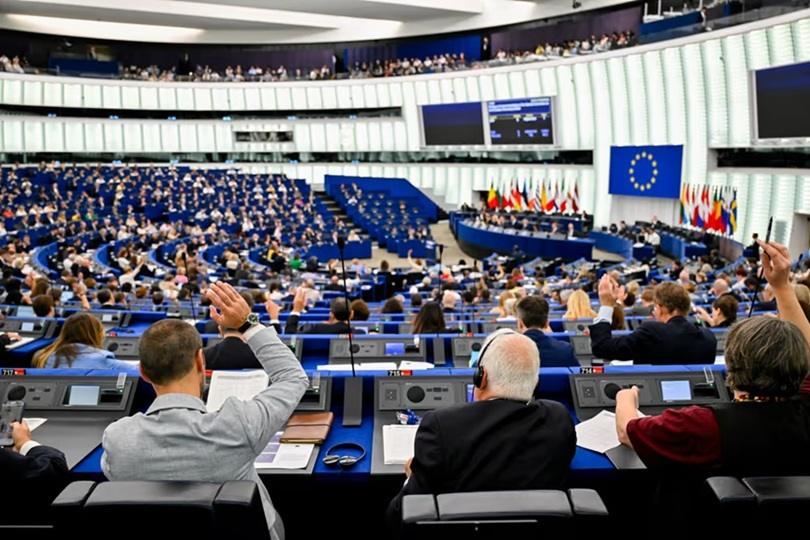
Lawmakers in the European Parliament voted 464 – 50 on Tuesday on the adoption of a negotiating position on proposed changes to the Carbon Border Adjustment Mechanism (CBAM), the EU’s carbon tax on imported goods, including extending CBAM to include hundreds of new downstream products, and putting in place a series of anti-circumvention measures aimed at closing loopholes and strengthening the enforcement of CBAM.
The position, which will form the basis of Parliament’s upcoming negotiation with member states in the EU Council, was adopted in a 464 – 50 vote. Council’s position, adopted in June, also seeks to expand on the number of goods included in CBAM, beyond an initial proposal by the European Commission.

CBAM was adopted in 2023, and entered into force at the beginning of 2026, to establish a mechanism designed to avoid “carbon leakage,” a situation in which companies move production of emissions intensive goods to countries with less stringent environmental and climate policies. CBAM is aimed at equalizing the price of carbon paid for EU products operating under the EU Emissions Trading System (ETS) – the EU’s internal cap and trade carbon pricing mechanism – with that paid for products produced in other countries, with companies that import into the EU required to purchase CBAM certificates in order to make up the difference.
The Commission proposed its update to expand CBAM in December 2025, following feedback from the program’s transitional phase which indicated a need to close loopholes to prevent circumvention and sources of carbon leakage, with CBAM currently targeting basic materials like aluminum, cement, electricity, and steel, raising costs for EU producers and risking the shift in production of downstream products to other countries.
The Commission’s proposal looked to include specific steel and aluminum-intensive downstream products in the program, adding 180 products with a high carbon leakage risk and a high share of steel or aluminum content, such as machinery, hardware and fabrications, vehicle components, domestic appliances and construction equipment.
Parliament’s position would go well beyond the Commission’s proposal, with lawmakers agreeing to expand the list by over 450 products, adding products beyond the Commission’s primary focus on industrial goods, in categories such as solar panels, heat pumps, and appliances. While expanding the list of covered products, MEPs also voted to add an exemption for electricity flows from non-EU countries used by grid operators to maintain network stability.
MEPs also voted to add a series of anti-circumvention measures to the Commission’s proposal, including lowering the “slightly modified” threshold by which small changes to a particular good would qualify as circumventing the rules, while also ensuring that the rules only target modifications made specifically to dodge CBAM, and not due to normal business decisions.
Additional changes adopted to the Commission’s proposal include the replacement of a rule allowing goods to be removed from the CBAM scope in the event of price shocks, with a mechanism to instead temporarily redirect CBAM revenues from the goods concerned to the affected sectors, as well as a proposal for simplified reporting for least-developed countries.
In addition to its CBAM position, the Parliament also adopted its position on the related temporary decarbonisation fund (TDF), also proposed in December by the Commission to support EU producers of CBAM goods vulnerable to carbon leakage risk. Parliament’s position would broaden the TDF’s product coverage to include fertilizer producers and downstream users facing higher carbon-related input costs, with products such as urea, ammonium nitrate and ammonium sulphate added to the list of eligible goods, and accelerate the timeline to run the TDF from 2027 to 2029, rather than only from 2028 as proposed by the Commission.
CBAM rapporteur Mohammed Chahim said:
“This compromise makes the CBAM stronger, fairer and more resilient. We have closed important loopholes, strengthened enforcement against circumvention, and expanded the mechanism’s scope where it matters most. It is a balanced package that protects European industry as it decarbonises while safeguarding the environmental integrity of the mechanism.”