Dominion Energy Sues Trump Administration for Halting Offshore Wind Project After $9 Billion Investment

Electric utility Dominion Energy filed a suit asking a federal court to block an order by the Trump administration’s Bureau of Ocean Energy Management (BOEM) to halt work on a major Virginia offshore wind project, after the company has already invested nearly $9 billion in the project, which was expected to begin generating electricity for consumers in early 2026.
The suit rejects the administration’s national security justification for the order, suggesting instead that it stems from an “unfounded animus” by the administration against wind energy.
The work stoppage order formed part of an announced pause by the Trump administration in December of the leases for all large-scale offshore wind projects under construction in the U.S., citing “national security risks” potentially resulting from the projects. The orders will freeze the development of five major projects along the U.S. east coast, representing nearly 6 GW of energy, that were set to enter commercial operation over the next 2 years.
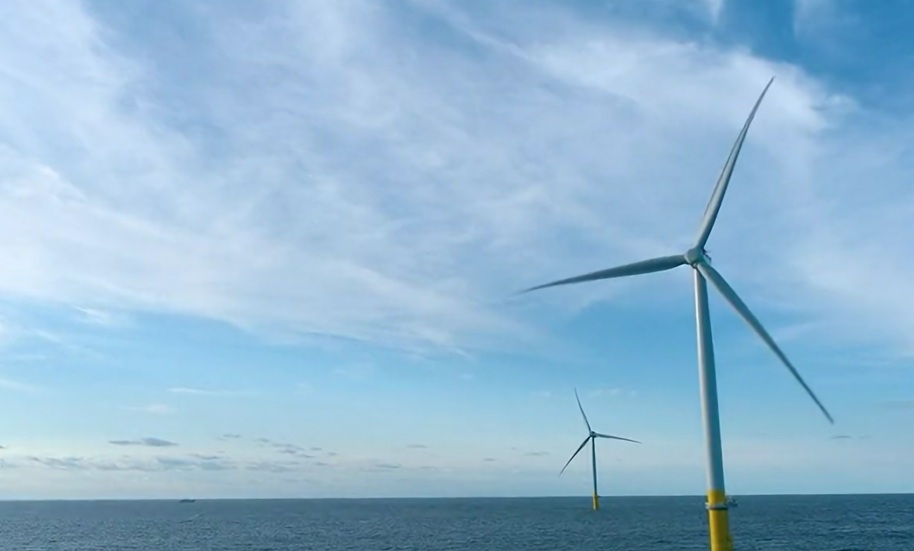
Dominion Energy’s Coastal Virginia Offshore Wind (CVOW) in offshore Virginia is the largest of the projects, at 2.6 GW. The project is expected to begin generating electricity in early 2026, and to have the capacity to supply 9.5 million MWh of energy per year, enough to power approximately 660,000 homes.
The company said that it has already invested $8.9 billion in the development of CVOW, with an expected total development cost of $11.2 billion.
The government order forms the latest in a series of moves by the Trump administration to stop the development of renewable energy projects, starting with a Presidential Memorandum signed by Trump on his first day in office, indefinitely halting all federal approvals for wind energy projects. The order was recently struck down by a U.S. federal court, which ruled that it was “arbitrary and capricious and contrary to law.”
Dominion’s lawsuit also describes the administration’s new order as “arbitrary and capricious,” and states that it is causing the company and its customers “serious, irreparable harm,” and threatening the development of a project set to provide much needed electricity to meet rapidly growing energy demand driven by data center expansion, digitization of the economy, and economic growth.
The suit notes that the federal, state and local approvals for the CVOW project “were the result of multiple, multi-year national security and environmental reviews,” while the BOEM’s order was based on new “classified” information “without any justification or detail” provided to the company.
The suit also describes the administration’s halt as “the latest in a series of irrational agency actions attacking offshore wind and then doubling down when those actions are found unlawful,” noting that it follows recent court orders blocking other attempts by the administration to freeze offshore wind projects.
In the suit, Dominion argued:
“Numerous statements and actions by the current Administration indicate that the Order instead is motivated by systematic and unfounded animus against wind energy. The Administration’s stated reasons and timing for the Order appear to be pretextual. That animus, and the lack of any reasoned basis for the Order, renders the Order arbitrary and capricious.”
The suit asks the court to “vacate the Order and enjoin BOEM from taking further action with respect to that Order.”
A hearing on the case has been set by the court for January 16.