

Rule 14a-8: Reform, Not Demolition

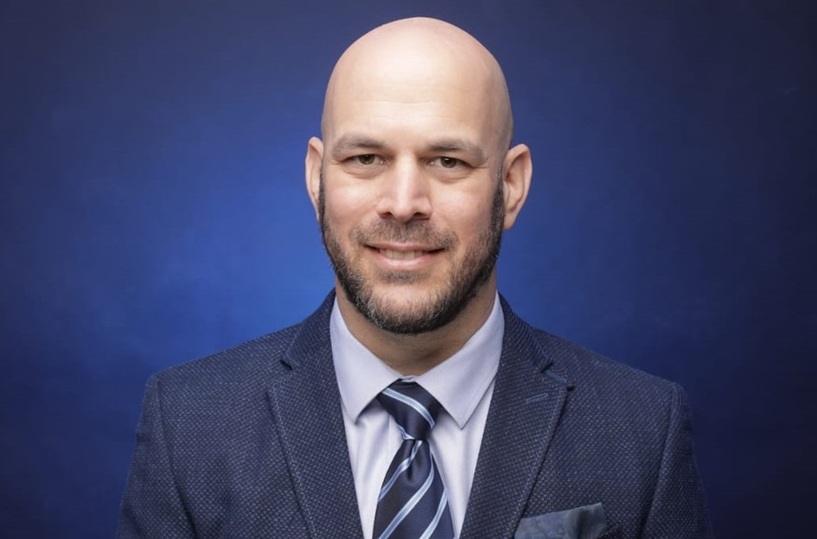
Guest post by: Matthew Illian, Director of Responsible Investing, and Noah Tabor, General Counsel, United Church Funds
For more than 80 years, the Securities and Exchange Commission’s Rule 14a-8 has done something both simple and powerful: it has given shareholders a meaningful way to put questions of corporate accountability before their fellow owners. Now the SEC’s proposal to rescind that Rule, in the guise of reforming the system, would be anything but that. It would instead remove the forum in which those debates occur.
At United Church Funds, we believe the SEC would do better to improve that process while preserving shareholders’ meaningful access to company proxy materials. To be sure, Rule 14a-8 has always been contentious. SEC decisions on proposal eligibility have often frustrated stakeholders on all sides, with some arguing that the Commission has allowed too many proposals onto the ballot and others contending that it has excluded matters of legitimate shareholder concern. Yet despite these imperfections and occasional disagreements over its administration, we believe Rule 14a-8 has provided a functioning framework for investor engagement and corporate accountability for decades.

In the 1970s, faith-based investors used Rule 14a-8 to submit shareholder resolutions urging U.S. companies to cease operations in South Africa because of the human rights abuses of apartheid. More recently, faith-based investors have used the proxy process to address risks related to single-use plastics, worker safety, data privacy, and many other issues. These concerns can affect a company’s operations, reputation, and long-term value. We believe the rules governing shareholder proposals should preserve meaningful access so that fellow shareholders can assess a proposal’s merits and decide whether to support it.
As faith-based investors, we also care about governance concerns and have filed Rule14a-8 shareholder proposals seeking to separate the CEO from the chair of the board at several companies. Shareholder proposals are also used to ensure that directors go up for reelection every single year and must resign when they fail to receive majority shareholder support. These reforms and others are supported by a broad range of investors and have become important mechanisms for improving corporate governance. If shareholders lose this route to placing such issues in company proxy materials, they will have fewer practical opportunities to advance these reforms and hold boards accountable.
If Rule 14a-8 is rescinded, access to company proxy materials will depend more heavily on state law and company governing documents, creating a fragmented and potentially confusing landscape. Texas has already adopted an opt-in law allowing certain publicly traded corporations to impose higher barriers to shareholder proposals. Its requirements include ownership, individually or as a group, of at least $1 million in voting shares or 3% of the company’s voting shares, together with holding-period and solicitation requirements. Such barriers could make participation more difficult and costly for investors, including faith-based institutions.
The timing and impact of any final rescission, including its implications for the 2027 proxy season, remain uncertain and could be affected by legal challenges, as well as by new political agendas and forces emerging out of recent midterm elections. In the meantime, investors should act now and make their voices heard by submitting comments opposing the rescission before the public comment period closes on November 20, 2026. We have submitted comments opposing the rescission, and we believe all investors should make their voices heard. For a change of this magnitude, the Commission should do more than simply solicit written comments. It should hold public hearings or roundtables to examine the practical consequences for investors and companies.
Reform should address the process’s real costs and inconsistencies while looking for solutions capable of enduring political change. In our comment letter, we proposed evaluating an independent Shareholder Proposal Review Service under a retained federal framework. A time-limited working group of investors, companies, SEC staff, and legal and dispute-resolution experts could examine how such a service might help resolve eligibility disputes promptly, fairly, and affordably. That evaluation would need to establish the service’s lawful scope, independence, and accessibility. The Commission should pursue practical improvements while preserving shareholders’ ability to put specific concerns before their fellow owners. That kind of work – not wholesale rescission – is where the Commission should focus.
The question is not whether Rule 14a-8 is perfect. It is whether investors and companies are better served by a functioning forum for accountability—or by no federal forum at all. Reform the process. Modernize it. Improve it. But don’t demolish it.