
DitchCarbon Launches New Solution to Identify, Address High-Emissions Electricity in Supply Chains

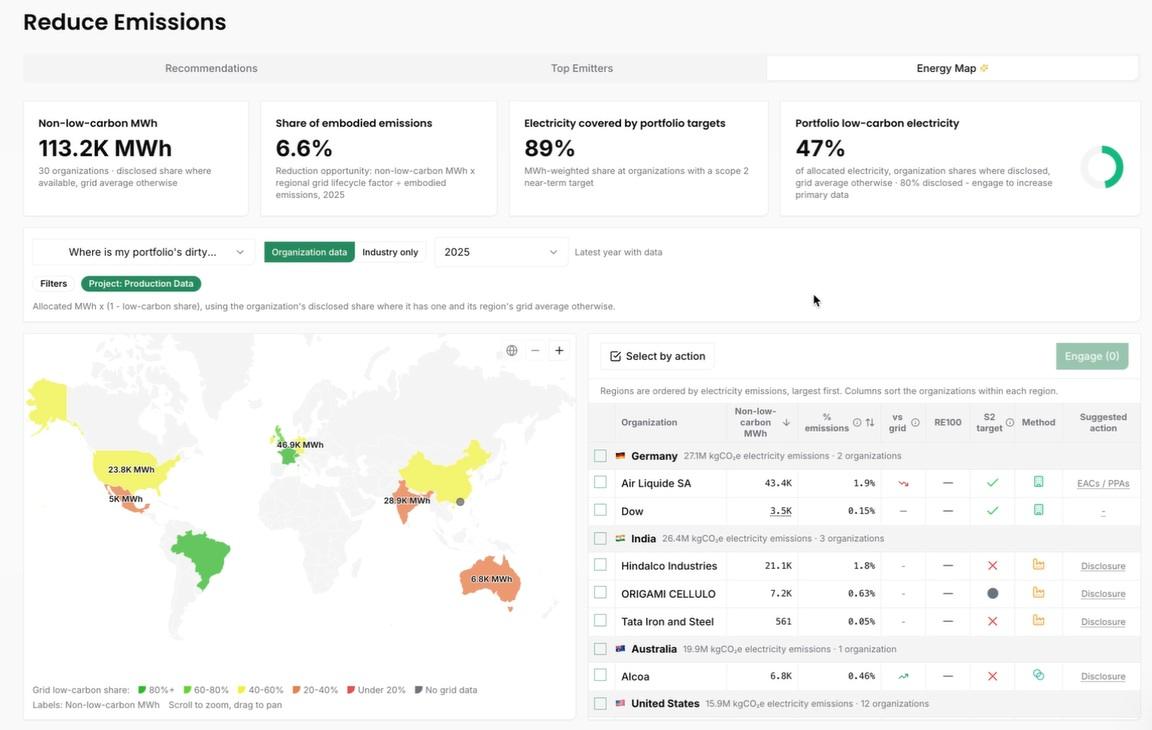
Scope 3 emissions-focused platform DitchCarbon announced the launch of its Electricity module, a new feature aimed at enabling enterprise procurement teams with global supply chains to identify which of their tier 1 suppliers could cut procurement emissions most by switching to electricity produced by low-carbon sources
According to DitchCarbon, the new solution is designed to provide large organizations with the ability to utilize one of the fastest Scope 3 decarbonization levers through promoting a switch to renewable energy in the supply chain, by providing visibility in an area in which it is typically difficult to identify which suppliers to approach, with supplier data sitting in hundreds of reports in dozens of formats, or not yet published at all.

In a post announcing the new feature, DitchCarbon CEO Marc Munier said:
“Every sustainability team we speak to is making real progress on its own Scope 2. Doing the same with suppliers is much harder, yet their Scope 2 sits inside your Scope 3, and that’s where much of the reduction potential is.”
According to the company, the new solution reads the published reports of every supplier, allocates each supplier’s electricity to the buyer’s purchases, and models the rest from industry and grid data, with each figure labelled as disclosed, derived or assumed. DitchCarbon added that using the new feature, its platform places every supplier’s electricity on a map by grid region, ranked by dirty megawatt-hours and electricity emissions and shows for each supplier whether it is ahead of or behind its local grid, indicates total electricity, renewable share and low carbon share by year for each organization profile, and can send chosen suppliers a request to disclose their electricity or raise their renewable share.
Alex Rudnicki, Head of Product at DitchCarbon, said:
“What has been missing is the data. Electricity is one of the few levers a supplier can pull within a year, and now a procurement team can size that opportunity across every purchase row before a single request goes out.”