SKF Decarbonizes Six Factories Globally

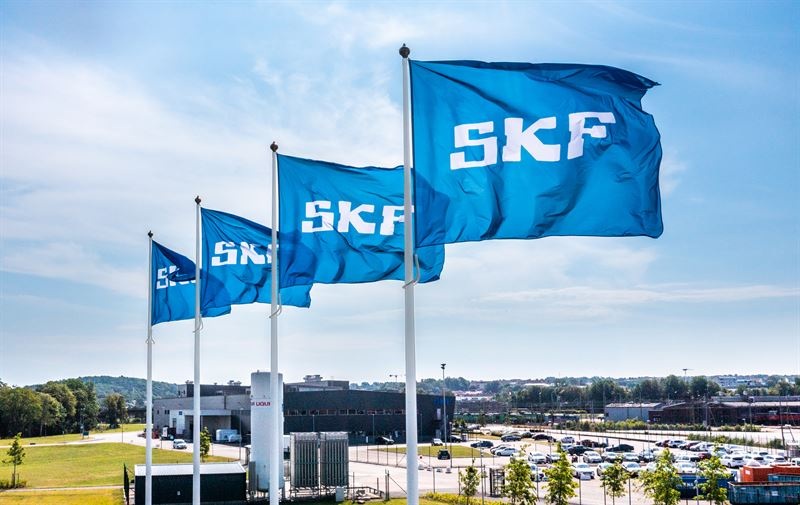
Swedish engineering and manufacturing company SKF announced that it has achieved decarbonized status at six new factories, bringing its total number of decarbonized factories to 9 across its global footprint.
SKF’s efforts to tackle the carbon footprint of its factories forms part of the company’s commitment to decarbonize its operations by 2030, and to reach net zero emissions throughout its supply chain by 2050.
The company’s operational decarbonization initiatives focus on tackling emissions linked to energy use and on-site fuel consumption at factories. For its factories to qualify as decarbonized, they are required to demonstrate a minimum 95% reduction in Scope 1 and Scope 2 emissions compared with 2019 levels, along with a clear plan to address any remaining emissions. Sites must also show continuous improvement in energy performance over time.
Sofie Runius Cederberg, Head of Sustainability at SKF, said:
“By reducing the carbon footprint of our products, we are also enabling our customers to develop sustainable solutions as well as supporting society in the transition to a more sustainable future.”
The new facilities achieving decarbonized status include factories in Nilai in Malaysia, Puebla in Mexico, Haridwar and Pune in India, Massa in Italy, and Ladson in USA, joining previously decarbonized factories in Steyr, Austria, Tudela, Spain, and Gothenburg, Sweden.
Together, the nine decarbonized factories account for almost 20% of SKF’s baseline manufacturing emissions.
The company said that the six new factories deployed several measures to decarbonize, including switching to renewable electricity and phasing out fossil fuel-based heating systems. The sites also invested in energy-efficient technologies such as heat pumps and advanced chiller systems.
Susanne Larson, Chief Sustainability Officer at SKF, said:
“Climate change is a global challenge, and this achievement reflects our commitment to climate action and operational excellence. By investing in renewable energy, energy efficiency and innovative solutions, we are also increasing our own resilience by lowering our energy demand.”